Table of Contents
- What Rental Car Maintenance Standards Actually Require
- Your Rental Car Inspection Checklist Before You Drive
- A Typical Rental Car Maintenance Schedule
- Rental Car Warning Lights: What They Mean and What to Do
- What to Do If a Rental Car Breaks Down
- Who Is Responsible for Maintenance During Your Rental
- What to Do When a Rental Vehicle Appears Unsafe
- Conclusion
- Frequently Asked Questions
Last Updated: October 14, 2026
What Rental Car Maintenance Standards Actually Require
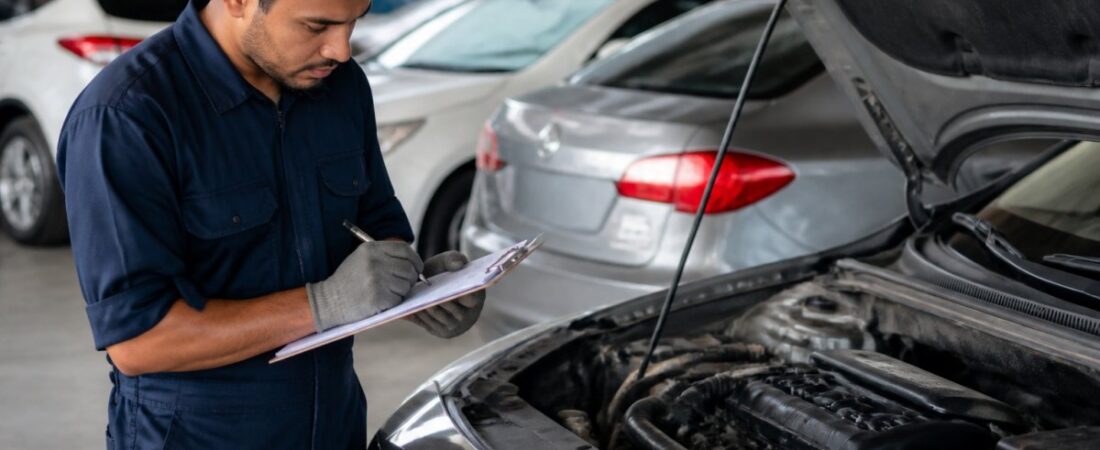
Rental car maintenance standards are the set of inspections, service intervals, and safety checks a rental company follows to keep every vehicle road-ready before it reaches a customer. Every vehicle we hand over should pass a documented check first. That matters because a car with a warning light or worn tires can turn a weekend trip into a roadside headache.
Most renters never see this side of the business. They see a clean car and a set of keys. The standards behind that car are what keep you safe.
So what actually governs a rental car maintenance program? Two things: what the manufacturer requires, and what the rental company decides to do on top of that.
Manufacturer Guidelines vs. Company Policy
Manufacturer guidelines are the service intervals and part replacements the automaker specifies for a given model. These cover oil changes, tire rotation, fluid checks, and filter replacement at set mileage or time intervals.
Company policy is what the rental operator adds. A rental fleet puts far more miles on a car in a year than a typical owner does. That means service intervals often get tightened, and inspections happen more often.
The two work together. Manufacturer guidelines set the floor. Company policy decides how far above that floor to aim.
What most renters miss is that the stricter layer is the one that protects them. A car that just came off a long rental gets checked again before it goes back out.
How Service Records and Inspection Logs Work
Service records are the paper trail. Every oil change, tire replacement, and repair gets logged with a date and mileage. Inspection logs go further. They record what was checked at each rental turnover, who checked it, and what they found.
Why does this matter to you? Because documented records are how a rental company proves a car was safe when it left the lot. If a warning light appears an hour into your trip, the log shows whether that issue was present at pickup.
If you ever have a dispute about a mechanical issue, ask to see the service record. An operation that can’t produce records is telling you something.
Your Rental Car Inspection Checklist Before You Drive
A pre-rental inspection is a quick walk-around you do before leaving the lot. It takes about five minutes and catches most problems before they become your problem. Do it every time, even if the line is long and you’re in a hurry.
Here is a checklist to consider:
- Walk the full perimeter and note any dents, scratches, or cracked glass
- Check all four tires for visible wear and proper inflation
- Look for the spare tire or tire repair kit and confirm it’s present
- Test the headlights, brake lights, and turn signals
- Check the windshield washer fluid and wipers
- Start the car and watch the dashboard for warning lights
- Test the brakes gently in the lot before you pull out
- Confirm the fuel level matches what your rental agreement states
- Photograph any existing damage before you drive away
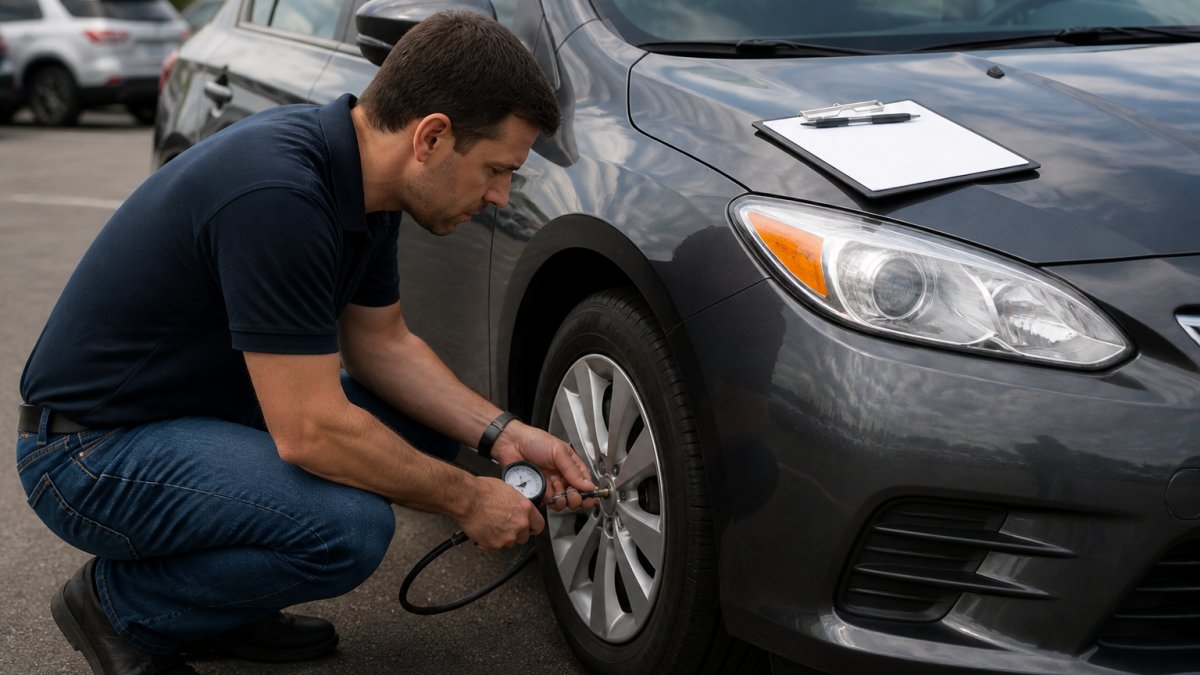
That last step is the one people skip. Photograph everything, including the roof and the underside of the bumpers. Damage documentation protects you at return.
Tires, Fluids, and Warning Lights
Tires are the single most important safety item on the checklist. Check tread depth and look for uneven wear. A tire with shallow tread grips poorly in rain and takes longer to stop.
Fluid levels matter too. Engine oil, coolant, brake fluid, and windshield washer fluid should all be at proper levels. Low brake fluid can signal a leak. Low coolant can mean overheating on a long drive.
Then there are the warning lights. A quick glance at the dashboard before you drive tells you a lot. We cover what each light means in its own section below.
Take your photos in daylight if you can. Flash photos in a dim garage hide scratches and dents that show up clearly later. If the lot is dark, move the car under a light before you start shooting.
A Typical Rental Car Maintenance Schedule
A rental car maintenance schedule combines time-based and mileage-based service. Because rental cars rack up miles fast, the mileage trigger usually comes first. Here is how a typical schedule might break down.
| Service | Typical Interval | What It Covers |
|---|---|---|
| Oil and filter change | Every 5,000-7,500 miles | Engine oil, oil filter |
| Tire rotation | Every 5,000-8,000 miles | Even tread wear across all four tires |
| Tire pressure check | Every rental turnover | Inflation to manufacturer spec |
| Fluid top-off | Every rental turnover | Coolant, brake fluid, washer fluid |
| Brake inspection | Every 15,000-30,000 miles | Pads, rotors, brake fluid |
| Air and cabin filter | Every 15,000-30,000 miles | Engine air, cabin air quality |
| Recall check | Before each rental | Open safety recalls for the model |
Those intervals are general guidance. The exact numbers depend on the vehicle and the manufacturer’s recommendations for that model.
Oil Changes, Tire Rotation, and Fluid Checks
Oil changes are the backbone of any maintenance schedule. Fresh oil keeps the engine cool and reduces wear. Skip them and engine damage builds quietly until it’s expensive.
Tire rotation spreads wear evenly across all four tires. It extends tire life and keeps handling predictable. Tire pressure checks happen more often, usually at every turnover, because pressure drops naturally over time.
Fluid checks are the quickest of the three. A technician tops off coolant, brake fluid, and washer fluid in minutes. It’s cheap insurance against a breakdown.
Rental Car Warning Lights: What They Mean and What to Do
Rental car warning lights fall into three color groups, and the color tells you how urgent the problem is. Red means stop. Yellow means check soon. Green or blue just means a system is on.
Here’s the breakdown:
- Red oil pressure light: Pull over safely and turn off the engine. Low oil pressure can destroy an engine in minutes.
- Red temperature light: Pull over and let the engine cool. Overheating can warp the cylinder head.
- Red brake light: Check that the parking brake is off. If it stays on, do not drive.
- Yellow check engine light: A steady light means schedule service. A flashing light means stop driving.
- Yellow tire pressure light: Check tire pressure at the next stop.
- Yellow battery light: The charging system may be failing. Get to a service point soon.
If a red light comes on, stop driving. Call the rental company‘s roadside assistance line before you do anything else. Don’t try to push through it.
Driving on a flashing check engine light can turn a minor repair into major engine damage. If the light is blinking, pull over and call for help. The repair bill is the rental company’s problem, not yours, but only if you stop.
What to Do If a Rental Car Breaks Down
A breakdown is stressful, but the process is simple if you follow it in order. First, get to safety. Pull off the road, turn on your hazard lights, and stay away from traffic.
Then follow these steps:
- Call the rental company‘s roadside assistance number from your rental agreement
- Give them your location, the vehicle, and a description of the problem
- Do not arrange your own tow or repair without authorization
- Keep all receipts if you pay for anything out of pocket
- Document the situation with photos and notes
That third step is where people get into trouble. If you call your own tow truck without approval, the rental company may not reimburse you. Repair authorization has to come from them first.
Most rental agreements include roadside assistance and a breakdown policy. Read that section before you drive off.
Who Is Responsible for Maintenance During Your Rental
Maintenance responsibility during a rental sits with the rental company, not you. The company owns the vehicle and handles scheduled maintenance, repairs, and safety checks. Your job is to drive carefully and report problems.
But renter responsibilities do exist. You are responsible for:
- Returning the car with the fuel level stated in your agreement
- Reporting any mechanical issue as soon as it appears
- Not ignoring warning lights or strange noises
- Driving in a way that doesn’t damage the vehicle
- Returning the car reasonably clean
Fuel policy is a common source of confusion. Most agreements use a full-to-full policy, meaning you return it full if you received it full. Check your agreement before you drive off.
If you cause damage through careless driving, that’s on you. Normal wear and tear is not. The line between the two is usually spelled out in the rental agreement.
What to Do When a Rental Vehicle Appears Unsafe
If a rental vehicle appears unsafe, do not drive it. Tell the rental company immediately and ask for a replacement. Safety comes before convenience, and a reputable company will swap the vehicle without argument.
Signs a car may be unsafe to drive:
- Brakes that feel soft, spongy, or grind when applied
- Steering that pulls hard to one side
- A flashing check engine light or any red warning light
- Tires with visible cords, bulges, or very low tread
- Strong smells of fuel, burning, or exhaust inside the cabin
- A windshield crack that blocks your view
If the company won’t address the issue, you have options. Document everything with photos and notes. Ask for the issue to be written into the rental record.
Safety standards and regulatory requirements vary by state. Rental companies must meet federal motor vehicle safety standards, and some states add their own inspection rules. The National Highway Traffic Safety Administration publishes recall and safety information you can check for any vehicle by VIN.
A rental car that feels wrong usually is wrong. Trust your instincts, document the issue, and ask for a different vehicle. No trip is worth driving an unsafe car.
This is also where a documented inspection process pays off. A company that logs every check can show you the car was safe at pickup. A company that can’t is asking you to take its word for it.
Conclusion
Rental car maintenance standards exist to protect you, but they only work when the rental company actually follows them. Knowing what to check, what the warning lights mean, and who’s responsible when something breaks puts you in control. Our team stays reachable if a problem comes up mid-trip. Rent today and see what a well-maintained rental actually feels like.
Frequently Asked Questions
How often are rental cars inspected and maintained?
Most rental companies follow manufacturer-recommended service intervals, which typically means oil changes every 5,000 to 10,000 miles depending on the vehicle and oil type. Between rentals, staff perform visual inspections covering tires, fluid levels, warning lights, and cleanliness. Vehicles also receive scheduled maintenance based on mileage thresholds tracked in fleet management systems. Exact timing varies by company, but reputable providers document every service visit.
What should I check on a rental car inspection checklist before driving?
Walk around the vehicle for body damage and note anything in the damage documentation. Check tire tread depth and pressure, look for uneven wear, and confirm the spare tire and jack are present. Inside, start the engine and watch for warning lights, test the brakes, headlights, turn signals, and windshield wipers. Verify fluid levels if you can see the reservoirs. If anything looks wrong, report it before leaving the lot.
Can I refuse a rental car that appears unsafe?
Yes. If a rental car has visible safety issues such as bald tires, brake problems, or persistent warning lights, you can refuse it and request another vehicle. Rental agreements require companies to provide a roadworthy vehicle, and refusing an unsafe car protects you from liability. Document the issue with photos and ask for a replacement in writing. If the company cannot provide a safe alternative, you may be entitled to a refund.
Who is responsible if a rental car breaks down?
The rental company handles mechanical repairs and roadside assistance for breakdowns unrelated to renter negligence. Your responsibility depends on the rental agreement: you typically cover damage from accidents, misuse, or neglect. If the car breaks down due to a mechanical issue, call the company’s roadside assistance line, avoid authorizing repairs yourself, and keep all receipts for reimbursement. Most agreements require you to notify the company immediately.