
Table of Contents
- What Makes a Good Rental Experience From Start to Finish
- How to Avoid Rental Car Lines at Pickup
- Specific Car Model Rental: How to Get the Exact Vehicle
- Rental Car Inspection Checklist Before You Drive
- Rental Car Return Checklist for a Smooth Drop-Off
- Pricing, Fees, and Communication That Build Trust
- Rental Car Inspection Checklist for a Better Rental Experience
- Frequently Asked Questions
Last Updated: October 16, 2026
What Makes a Good Rental Experience From Start to Finish
What makes a good rental experience comes down to three things: a clean, safe vehicle, clear pricing with no surprises, and a team that answers when you call.
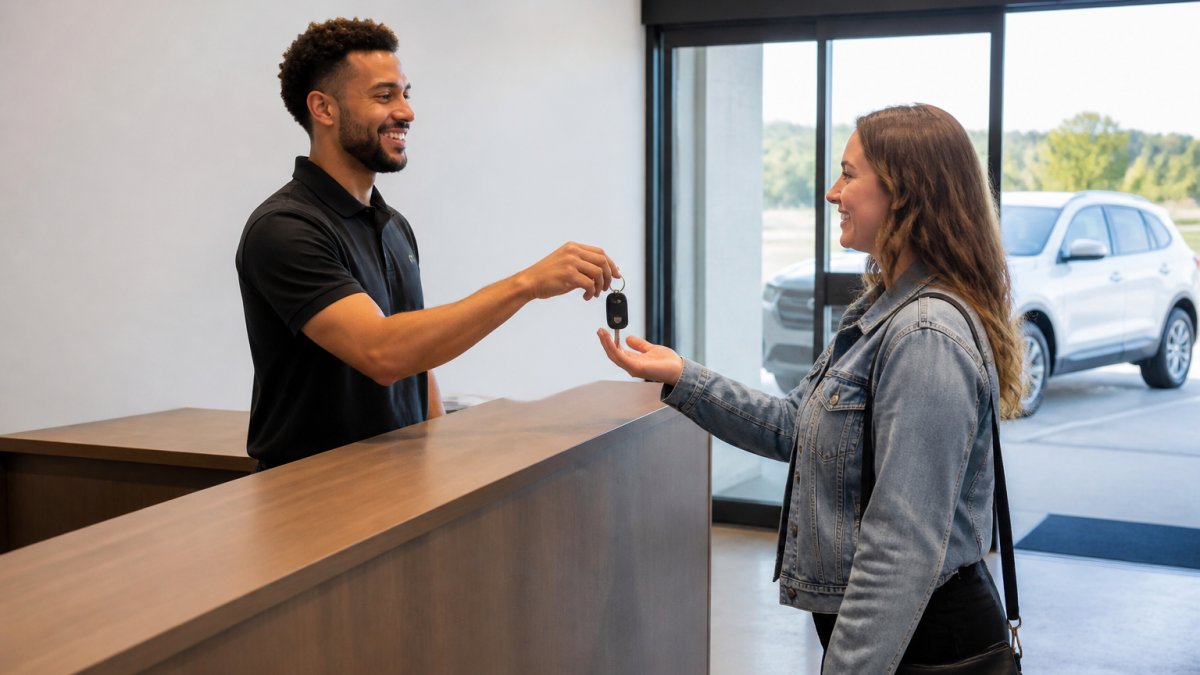
A good rental experience is the full arc of your rental, from the moment you search for a vehicle to the day you hand back the keys.
Here is what most people get wrong: they judge a rental by the car alone.
A good rental experience is measured across five stages: booking, pickup, inspection, the drive, and return. Weakness in any single stage drags down your view of the whole rental.
The Five Stages That Define Your Rental
- Booking – Can you reserve the exact vehicle you need, at a price you can see up front?
- Pickup – How long do you wait, and does the car match your reservation?
- Inspection – Do you get time to note existing damage before you drive off?
- The drive – Is the vehicle clean, safe, and free of warning lights?
- Return – Is drop-off fast, and does the final bill match the quote?
Most complaints trace back to stages two and five. That is where trust is won or lost.
How to Avoid Rental Car Lines at Pickup
You avoid rental car lines by completing your paperwork before you arrive. A reservation with verified details takes minutes at the counter instead of an hour.
The American Automobile Association’s travel guidance notes that airport pickup counters are busiest during morning and evening travel windows. Book your pickup outside those peaks when you can.
A few habits cut your wait time fast:
- Finish your license and payment details online before pickup day
- Choose an off-airport location if one is nearby
- Arrive mid-morning or early afternoon, not at peak
- Skip the counter entirely if the provider offers express key pickup
Ask whether your provider offers after-hours or express pickup. At 1st Choice Rentals, we prioritize convenience and reliability for every customer.
Specific Car Model Rental: How to Get the Exact Vehicle
Getting the exact car model you reserved depends on one thing: a provider that holds vehicles for confirmed reservations instead of handing out “or similar” substitutes.
Most national chains sell you a class, not a model. You reserve a “midsize SUV” and drive off in whatever is on the lot.
Here is how to lock in the vehicle you actually want:
- Ask if the provider guarantees the exact model, not a category
- Confirm in writing, by email or text, before pickup day
- Book earlier than you think you need to
- Ask what happens if that model is unavailable
The last point matters most. A provider that promises a specific car should also tell you what you get if it falls through.
| What You Need | What to Ask | Why It Matters |
|---|---|---|
| Exact model | “Is this model guaranteed?” | Avoids a last-minute swap |
| Larger vehicle | “Do you have trucks or vans?” | Moving and hauling needs |
| Backup plan | “What if it’s unavailable?” | Protects your trip |
| Written proof | “Can you confirm by email?” | Gives you a record |
Rental Car Inspection Checklist Before You Drive
A rental car inspection before you drive protects you from being charged for damage you did not cause. Walk the whole vehicle with your phone camera rolling, and note every scratch, dent, and chip before you leave the lot.
This step takes five minutes. It can save you a dispute later. Here is what to check:
- Walk the full exterior and photograph all four sides
- Check the windshield and lights for chips or cracks
- Look at all four tires for wear and pressure
- Test the lights, turn signals, and brakes
Skipping the walk-around is the most common and most costly mistake. If you return a car with damage you never documented, you may be billed for a repair you did not cause.
Rental Car Return Checklist for a Smooth Drop-Off
A smooth return starts before you pull into the lot. Refuel to the agreed level, gather your belongings, and allow extra time so a small delay does not turn into a missed flight.
Use this checklist at drop-off:
- Refuel to the level stated in your agreement, and keep the pump receipt
- Remove all personal items, including phone chargers, toll passes, and parking stubs
- Take photos of the fuel gauge and odometer with the timestamp visible
- Photograph the exterior one last time, including the roof and lower bumpers
That last photo set is your proof. If a charge shows up later, you have a record of the car’s condition at return. A common pattern is a damage or cleaning charge appearing on the statement weeks after drop-off, when the renter has already deleted the photos.
What to Do If the Final Bill Does Not Match the Quote
Do not leave the lot without a printed or emailed final receipt. If the total is higher than your confirmed quote, ask the agent to itemize the difference on the spot.
If you have already left, the sequence that works is:
- Call the location directly, not the national reservation line
- Reference your rental agreement number and the confirmed quote
- Ask for the charge to be itemized in writing
- Dispute the charge with your card issuer if the itemization does not match the agreement
The Federal Trade Commission guidance on rental terms reminds consumers to read the agreement and ask about fees up front, which is exactly why the return receipt matters, it is the document that proves what you actually agreed to.
Returning the car after hours without photos is the single most common way renters lose a dispute. If no agent is present, your timestamped photo set is the only evidence of the vehicle’s condition.
Return-Stage Service Standards Worth Expecting
A provider that runs a good return process will typically meet a few practical standards. These are not universal rules, but they are the benchmarks that separate a smooth drop-off from a frustrating one:
- A final receipt issued at the counter or within the same business day
- A damage assessment done with the renter present, or documented with photos
- A clear written explanation of any charge added after the quote
- A stated window for when a post-return charge can still appear
- A direct phone number for the local branch, not just a central line
If a provider cannot tell you how long after return a charge can still post, that is a signal to document everything and pay close attention to your statement.
The return stage is where trust is tested. A receipt in hand, a timestamped photo set, and a written itemization of any difference turn a potential dispute into a non-event.
Pricing, Fees, and Communication That Build Trust
Transparent pricing and fast communication are what separate a good rental experience from a frustrating one. You should know your total before you drive off, and you should reach a real person when something goes wrong.
Hidden fees are the number one complaint renters raise. Watch for these:
- Fuel service charges if you return the tank short
- Late return fees, often charged by the hour after a short grace period
- Additional driver charges, which can apply per driver per day
- Toll and ticket processing fees, which are separate from the toll itself
- Cleaning fees for normal wear, which should not apply to ordinary use
Ask for a full breakdown in writing before you sign. The Federal Trade Commission guidance on rental terms reminds consumers to read the agreement and ask about fees up front, and that advice applies to every line item above.
Practical Service Standards for Communication
Communication is where a rental experience is either saved or ruined. A warning light, a billing question, or a change of plans all require a fast, human answer. Here are the service standards worth asking about before you book, and worth expecting once you have:
- Acknowledgement of a request: a real reply, not an automated confirmation, within a few hours during business hours
- Emergency response: a live person reachable by phone for breakdowns, accidents, or safety issues, at any hour
- Repair or replacement timeline: a stated window for when a substitute vehicle will be available
- Billing question response: an itemized answer within one to two business days
- Escalation path: a named manager or direct branch line if the first response does not resolve the issue
These are not universal guarantees, but they are the benchmarks that separate a provider that communicates from one that merely answers the phone. If a provider cannot tell you who to call after hours, that is your answer.
How to Measure Whether a Provider Actually Communicates Well
Before you book, you can test a provider’s communication without renting anything. Send one specific question, for example, “What is your policy if the exact model I reserve is unavailable?”, and time the response.
After the rental, a few simple measures tell you whether the experience was good:
- How long did it take to reach a live person when you called?
- Did the final bill match the quote, and if not, was the difference explained in writing?
- Were you notified in advance of any change to your reservation?
- Did you receive a receipt without having to ask twice?
Tracking these four things over a few rentals gives you a personal service record. It is the same logic property managers use when they track tenant satisfaction, applied to a rental car.
Before you sign, ask one direct question: “What could add to this total, and how long after return can a charge still post?” A straight answer tells you a lot about how the rest of the rental will go.
Transparent pricing and measurable communication are the two trust builders a renter can actually verify. Ask about fees in writing, test the response time before you book, and keep your receipt until the statement clears.
Rental Car Inspection Checklist for a Better Rental Experience
A second inspection at return closes the loop. Photograph the car again, confirm the fuel level, and get your receipt in hand before you leave the lot.
The two inspections, one before you drive and one at return, are the backbone of a good rental experience.
Here is the short version of both, side by side:
| Stage | What to Do | What It Protects |
|---|---|---|
| Before you drive | Photograph all damage, check fluids and lights | You, from false damage claims |
| At return | Refuel, photograph, get receipt | You, from surprise fees |
A provider that welcomes this process is one worth returning to. One that rushes you past it is not.
Frequently Asked Questions
What makes a good rental experience?
A good rental experience comes down to a few basics: a clean, well-maintained vehicle, transparent pricing with no surprise fees, a fast pickup process, and a team that answers questions quickly. A rental car inspection checklist helps you document the vehicle’s condition before you drive off, and a return checklist prevents billing disputes. When pickup, driving, and drop-off all go smoothly, the whole experience feels reliable instead of stressful.
How can I avoid long lines when picking up a rental car?
Book online and complete any paperwork or verification steps in advance, since most delays come from incomplete documents at the counter. Arrive outside peak hours, typically early morning or mid-afternoon, and have your driver’s license, insurance information, and payment method ready. Ask ahead whether your reservation includes express pickup.
Can I reserve a specific rental car model?
Many rental companies let you reserve a specific car model rental, but availability depends on fleet size and timing. Always ask whether your reservation locks in a specific car or just a category, and get that confirmation in writing before you arrive.
What should I check before driving a rental car?
Walk around the vehicle and photograph any existing scratches, dents, or cracked glass before leaving the lot. Check the tires for wear and proper inflation, test the lights, wipers, and horn, and confirm the fuel or charge level matches what’s on your paperwork. Inside, verify the odometer reading and make sure warning lights turn off after the engine starts. A quick rental car inspection checklist on your phone keeps this process under five minutes.
Renting a car should be simple, and too often it is not. 1st Choice Rentals was built to fix that: we confirm your vehicle before you arrive, keep our fleet clean and ready, and give you a real person to call when you have a question. Our team handles everything from standard cars to trucks and vans for moves and projects. Rent today with 1st Choice Rentals and get the straightforward rental you came for.